Understand how braided tape shielding reduces interference, protects critical signals, and guides the specification of reliable industrial cables in the field.
In an industrial plant, an intermittent communication failure, an unstable instrument reading, or a positioning error in a servo drive can all originate from the same point: electromagnetic interference. Ribbon braid shielding is a construction developed to reduce this risk in cables that carry signals, data, or control in electrically aggressive environments.
However, the choice should not be made solely based on the presence of shielding in the cable description. Performance depends on the frequency of the interference, the cable geometry, the braid covering, the grounding, the installation, and the compatibility between the conductor, insulation, shielding, and application. In critical systems, specifying correctly means protecting operational continuity before the problem appears in the field.
What is wire mesh shielding?
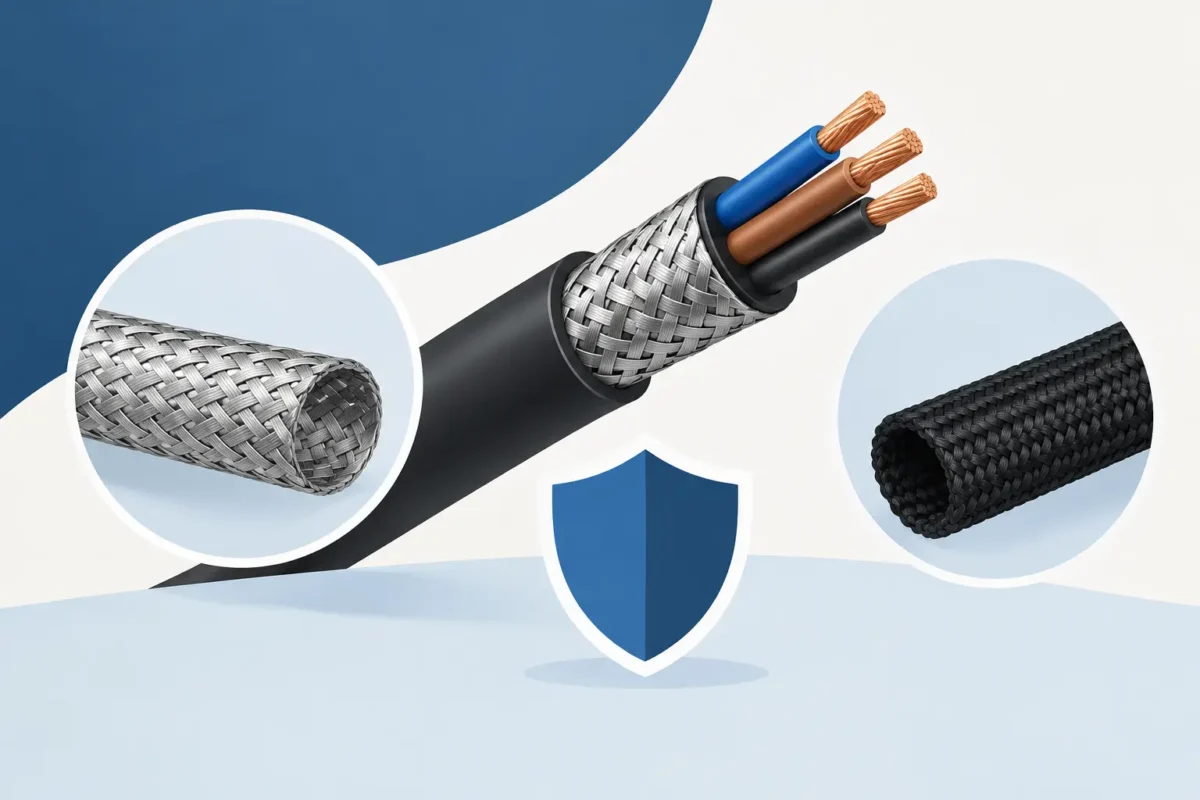
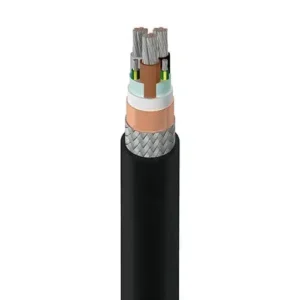
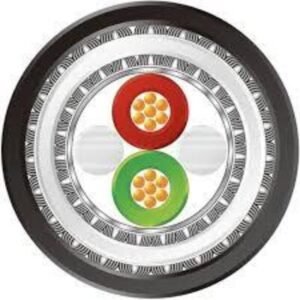
The braided tape shielding combines two layers of electromagnetic protection. The first is a metallic tape, usually aluminum/polyester, applied around the pairs, triples, or core of the cable. The second is a braided mesh of bare copper, tinned copper, or other conductive material suitable for the application.
The tape creates a barrier with high surface coverage, being particularly efficient against high-frequency interference. The braid, in turn, offers low impedance, good conductivity, and greater mechanical resistance during assembly. When applied together, the layers extend the shielding efficiency over a wider frequency range and make the assembly more suitable for demanding industrial installations.
In many projects, the tape includes a drain wire in contact with its metallized face. This component facilitates electrical continuity and grounding of the tape layer, especially when direct termination would be impractical. The braid, however, must be terminated appropriately so that its protective capacity is not lost during connection.
Why a single layer of armor isn't always enough.
Metallic tape typically provides near 100% coverage of the protected area. This helps block high-frequency electromagnetic fields, common in electronic switching, communication networks, and digital equipment. However, it is more susceptible to mechanical damage and has conduction limitations compared to a copper mesh.
Braided cable has variable coverage, defined by density and braiding angle. Higher coverage tends to offer better shielding performance, but can increase cable diameter, weight, cost, and stiffness. Its advantage lies in its low impedance and physical resistance, characteristics relevant for grounding, induced currents, and installations subjected to vibration or movement.
The combination of tape and mesh addresses a recurring engineering need: protecting against noise of various kinds without transferring the risk to the installation stage. In applications with frequency inverters, servomotors, PLCs, encoders, low-power instrumentation , and industrial networks, this balance can be crucial for system stability.
Where does mesh tape shielding make a difference?
In industrial automation, analog signal cables can run close to motors, contactors, busbars, and power circuits. Without adequate protection, interference can manifest as oscillation in pressure, temperature, flow, or level transmitters. Instead of reflecting a real process condition, the signal begins to carry electrical noise.
In communication systems, the effect can be even more difficult to diagnose. Packet loss, sporadic network failures, alarms without apparent cause, and equipment unavailability can occur when the cable is installed on a route shared with sources of electromagnetic emission. Shielding reduces the circuit's susceptibility, but it does not replace good routing practices and segregation between power and signal.
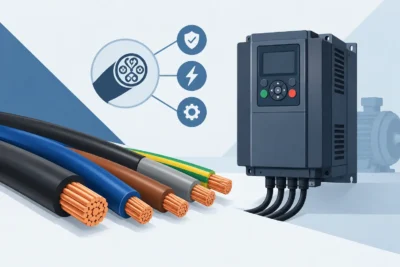
In cables for inverters and servomotors, the situation is particular. The high-frequency pulses generated by PWM create common-mode voltages and emissions that require attention to shielding, construction symmetry, and grounding. In these cases, a copper braid with adequate coverage usually plays a central role in reducing emissions. Additional tape can increase efficiency at higher frequencies, provided the cable is designed for the entire application, and not just to meet a generic description.
Naval, oil and gas, mining, steelmaking, railway, and airport environments also require further analysis. Beyond electromagnetic compatibility, the cable may need to meet requirements for resistance to oil, moisture, flame, low smoke emission, abrasion, twisting, continuous bending, salt spray, or extreme temperatures. Shielding is a functional layer of the design, not an isolated solution.
Efficiency depends on termination.
A cable with ribbon and braid shielding can lose much of its performance if it is improperly terminated. The most critical point is the electrical continuity between the shielding, connector, cable gland, panel, and grounding system.
For high frequencies, 360-degree termination is typically more efficient than connecting the shield with a long pigtail. The pigtail increases the inductance of the ground path and can make the exposed section vulnerable to interference. Whenever the system architecture allows, the shield should maintain as much contact as possible with the metallic termination element.
It is also necessary to define the grounding philosophy according to the application. There are circuits where the shielding is grounded at both ends to improve high-frequency performance; in others, the strategy considers potential differences, circulating currents, signal type, and equipment manufacturer guidelines. There is no single rule applicable to every installation. The decision must consider the complete electrical design and the building's regulations.
Another common mistake is interrupting the shielding at junction boxes, connectors, or splices without ensuring its continuity. Discontinuous shielding reduces protection precisely where the system is most exposed. Inspection of the assembly should assess not only the integrity of the conductors but also the integrity of the shielding path.
How to specify the correct cable
The specification should begin with the circuit and the environment, not the commercial name of the shielding. An objective technical analysis considers at least four factors:
- The nature of the signal, including voltage level, frequency, sensitivity, and communication protocol;
- Nearby sources of interference, such as inverters, motors, transformers, busbars, and radio frequency equipment;
- The mechanical condition, including fixed installation, bending, torsion, dragging, vibration, and tensile stress;
- Environmental and regulatory requirements, such as the presence of oil, moisture, chemical agents, flame, smoke, temperature, and applicable certifications.
It is also necessary to assess whether the shielding will be collective, individual, or combined. In multi-pair instrumentation cables, for example, individual shielding of the pairs can reduce interference between circuits, while collective shielding protects the assembly against external sources. In certain applications, the two solutions are combined.
The braid material deserves attention. Tinned copper may be indicated when greater corrosion resistance is needed, such as in humid, marine , or salt spray environments. Bare copper offers excellent conductivity, but its suitability depends on exposure conditions and the overall cable construction. The correct selection must be aligned with the expected service life and maintenance plan.
Shielding doesn't fix design flaws.
Tape and mesh reduce the propagation of interference, but they do not compensate for inadequate routing, poor grounding, or incompatibility between cable and equipment. Running instrumentation cables parallel to power cables for long distances, installing connectors without shielding continuity, or using inadequate cable glands can compromise a technically well-specified system.
Physical separation between circuits, near-90-degree angle crossings when unavoidable, equipotential bonding of metallic masses, and the choice of compatible accessories all contribute to the same result. Electromagnetic compatibility is a systems discipline. The cable is a strategic component, but it needs to operate within a coherent electrical architecture.
For special projects , on-demand manufacturing allows for adjustments to the number of conductors, conductor cross-section, pair or triple formation, braid covering, insulation and sheathing materials, colors, identification, and regulatory requirements. This level of customization avoids field adaptations and brings the cable construction closer to real operating conditions.
Innovcable develops solutions for industrial applications where electrical performance, operational durability, and quality traceability need to work together. Instead of treating shielding as a standard item, engineering assesses the cable's function within the process and the risks it needs to withstand.
When specifying braided ribbon shielding, the most useful question isn't simply "which cable offers the most protection?". The correct question is: "which construction keeps my signal intact, my installation reliable, and my process available under real-world operating conditions?" This answer guides a technical choice that reduces failures before system startup.