AFT Cable: A Complete Technical Guide to High-Performance Connectivity
The AFT (High Flexibility and Transmission) cable represents a robust and versatile solution for a wide range of applications requiring high-fidelity signal transmission and protection against interference. This in-depth guide, intended for engineers, installers, and students, explores the technical, regulatory, and practical nuances of this essential component in automation, professional audio, and electronic security projects, ensuring safe and efficient installations. Designed for maximum performance, a complete understanding of the AFT cable is a key differentiator for professionals seeking excellence and reliability in their installations.
The Technical Definition
First and foremost, it's essential to understand the essence of AFT cable . The acronym, often associated with "High Flexibility and Transmission," describes its primary characteristics. It's an electrical cable with high-purity copper conductors, specifically designed for the transmission of low-voltage audio, video, and data signals. Therefore, its design aims not only for efficient signal conduction but also for flexibility that facilitates installation in complex scenarios, such as conduits with sharp bends or panels with limited space, making AFT cable a strategic choice.
Critical Applications
The applications for AFT cable are extremely diverse, encompassing multiple technological sectors. In industrial and building automation systems, for example, it is fundamental for interconnecting sensors, actuators, and controllers, ensuring precise communication between devices. Furthermore, in the field of electronic security, AFT cable is widely used in fire alarm systems, access control, and closed-circuit television (CCTV) systems, where signal integrity is crucial for security. Consequently, its versatility makes it an indispensable component in modern projects.
The Structure and Composition of the AFT Cable
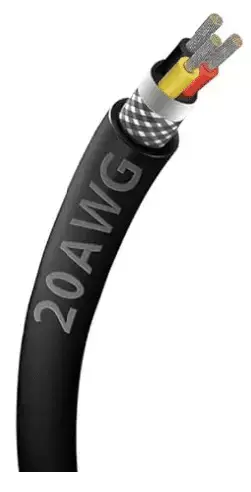
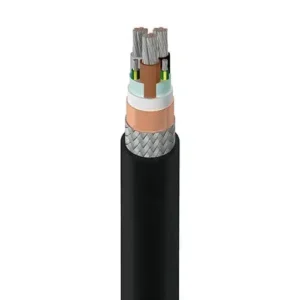
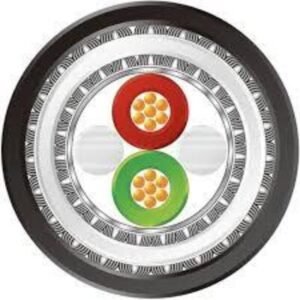
Analyzing its structure, AFT cable is typically composed of bare or tinned electrolytic copper wire conductors, with class 4 or 5 stranding, which gives it high flexibility. Furthermore, these conductors are individually insulated by thermoplastic compounds, such as polyethylene (PE), which offers excellent dielectric strength. Consequently, this internal composition is protected by a separating tape and, crucially, by shielding which can be aluminum tape or copper braid, the latter being the most effective against electromagnetic interference.
Armoring as a Differentiating Factor
Shielding is undoubtedly one of the most important characteristics of AFT cable . This layer, usually a braid of copper wires, acts as a Faraday cage, protecting the signals traveling in the internal conductors against noise and electromagnetic interference (EMI) generated by motors, fluorescent lamps, and other power cables. Therefore, the use of shielded AFT cable is mandatory in noisy industrial environments or in installations where signal purity is critical, such as in audio recording studios.
Applicable Technical Standards
To ensure safety and performance, the manufacturing and installation of AFT cable must follow strict technical standards. In Brazil, ABNT (Brazilian Association of Technical Standards) establishes important guidelines, such as NBR 5410 for low-voltage electrical installations, which must be observed during the design phase. Although there is no exclusive standard for AFT cable , standards relating to conductors, insulation, and test methods, such as those in the NBR NM 280 series, are applicable, ensuring a quality and reliability standard recognized by the market.
Flexibility and Handling
High flexibility is an attribute that significantly simplifies the work of installers. Thanks to the use of high-class stranded conductors and flexible insulation and sheathing materials such as PVC, the AFT cable can be easily handled and installed in hard-to-reach places. However, it is important that, even though it is flexible, bends with very small radii are avoided, as these can compromise the internal structure of the conductors and shielding, thus affecting the cable's long-term performance.
The AFT cable in professional audio systems.
In professional audio systems, signal quality is paramount. For this reason, the AFT cable is the preferred choice for connecting microphones, mixing consoles, peripherals, and reference monitors. Its efficient shielding minimizes hum and noise pickup, resulting in clean, crystal-clear audio transmission. Therefore, audio engineers and sound technicians rely on the AFT cable 's ability to preserve signal integrity from the source to the playback system.
Safety first
Safety in electrical installations is a non-negotiable factor. AFT cable , when manufactured in accordance with standards, possesses characteristics that contribute to the overall safety of the system. The outer PVC sheath, for example, generally has flame-retardant properties (LSZH – Low Smoke Zero Halogen in special versions), which delay the spread of fire and emit low amounts of smoke and toxic gases in case of fire. Thus, choosing a certified AFT cable is also a decision for the safety of people and property.
The Role of AFT Cable in Building Automation
Building automation integrates lighting, air conditioning, security, and entertainment systems. In this scenario, the AFT cable acts as the building's nervous system, reliably transmitting commands and data. From controlling an electronic turnstile to managing a complex ambient sound system, the robustness of the AFT cable ensures that communication between the different subsystems occurs flawlessly, providing comfort, energy efficiency, and increased property value.
Choosing the Correct Gauge for AFT Cable
Specifying the wire gauge (conductor diameter), usually expressed in AWG (American Wire Gauge), is a crucial step in the design process. The correct choice of AFT cable gauge depends on factors such as transmission distance and signal current. Larger gauges (lower AWG number) offer lower electrical resistance, making them suitable for longer distances to avoid significant signal loss. Therefore, a detailed technical analysis of the application is essential for proper selection.
Professional Installation
Proper installation is just as important as cable quality. During the installation of AFT cable , it is vital to ensure that the shielding is properly grounded at one point in the circuit, usually on the source equipment side, so that any interference is channeled to ground. Furthermore, the AFT cable should not be run parallel to or too close to high-power cables over long distances, thus minimizing the risk of noise induction.
The Versatility of AFT Cable in Different Routes
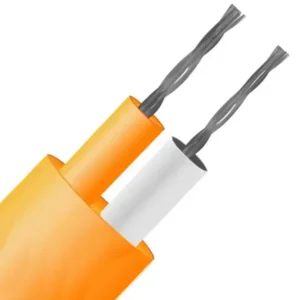
The AFT cable is manufactured in various conductor configurations (internal conductors), such as 2, 3, 4 or more conductors, to meet different connection needs. A 2-conductor cable, for example, is common for mono audio signals or for powering simple sensors. Configurations with more conductors are used in stereo audio connections, microphones with phantom power, or in control systems that require multiple communication channels. This variety of options makes the AFT cable extremely adaptable.
Durability and Longevity
Designed with high-quality materials, the AFT cable offers a long service life. The PVC outer sheath protects the internal components against moisture, abrasion, and chemical agents present in the environment. Consequently, when installed according to best practices and protected from severe mechanical damage, the AFT cable maintains its electrical and mechanical characteristics for many years, representing a safe investment with low maintenance costs for any project.
AFT Cable and Control Signal Transmission
In industrial processes, precision is fundamental. The AFT cable plays a vital role in transmitting analog (such as 4-20 mA) or digital control signals between instruments and the control system (PLC). The noise immunity provided by its shielding ensures that measurements of variables such as pressure, temperature, and flow are transmitted without corruption, allowing for stable and efficient process control.
Differences between AFT Cable and Other Cables
It is important to distinguish AFT cable from other types of cables. Unlike power cables, which are designed to carry high current, AFT cable is optimized for low voltage and high frequency signals. Compared to coaxial cables, which have a specific geometry for radio frequency signals, AFT cable with its twisted conductors is more suitable for audio and control signals, offering an excellent balance between performance and cost for these applications.
The AFT cable in equipment interconnection.
Reliable equipment interconnection is a basic premise for the operation of any electronic system. Whether connecting a sensor to a fuel pump at a gas station or linking peripherals in a recording studio, the AFT cable ensures a robust physical connection and reliable data communication. Therefore, carefully choosing this cable is a fundamental step in avoiding intermittent failures and diagnostic problems in the system.
Innovations and Trends
The cable market is constantly evolving. For CABO AFT , innovations focus on more resistant and environmentally friendly insulation and sheathing materials, such as LSZH compounds. Furthermore, there is continuous improvement in manufacturing processes to ensure shielding with even greater coverage and internal geometries that further minimize crosstalk between conductor pairs, anticipating the demands of increasingly fast and sensitive communication systems.
Environmental Considerations
Sustainability is a growing concern in the industry. AFT cable manufacturers are increasingly attentive to the use of recyclable materials that comply with international directives, such as RoHS (Restriction of Hazardous Substances), which restricts the use of hazardous substances like lead and mercury. By choosing a conscious supplier, engineers and installers contribute to a more sustainable product lifecycle.
Maintenance and Verification of the AFT Cable
Despite its durability, periodic inspections of the installation are recommended. It is important to check the physical integrity of the AFT cable , looking for signs of wear, crushing, or cuts in the outer sheath that could expose the shielding or conductors. In addition, verifying electrical continuity and the quality of the shielding grounding can help prevent failures and ensure that the system continues to operate at peak performance and safety over time.
Conclusion: Strategic Relevance
In short, AFT cable is much more than a simple conductor; it is an essential technological component that guarantees the reliability and performance of countless electronic systems. From complex industrial applications to high-fidelity audio systems, its robust construction, flexibility, and above all, its effective shielding against interference position it as a superior technical choice. Therefore, in-depth knowledge is a valuable asset for any professional in the technical field who seeks to deliver projects of excellence.