Excellence in Safety and Durability: The Ultimate Guide to the SHF2 MUD Cable
The Essential Definition
First and foremost, it's crucial to understand that the SHF2 MUD cable represents the pinnacle of cable technology for harsh environments. The acronym reveals its characteristics: "SHF2" refers to a halogen-free, oil-resistant, thermoset sheath compound, while "MUD" indicates its specific resistance to fluids and drilling mud (Mud Resistant). Consequently, this cable is designed to offer maximum safety and performance in installations where failure is not an option, guaranteeing electrical and mechanical integrity under extreme conditions. The combination of these properties makes it indispensable in high-risk sectors.
The Strategic Importance of the SHF2 MUD Cable in Offshore Environments
In this context of high demands, the SHF2 MUD cable becomes a strategic component, especially on offshore oil and gas platforms. In these locations, cables are continuously exposed to a combination of hydrocarbons, corrosive chemicals, drilling mud, saline moisture, and UV radiation. Therefore, the use of a cable with MUD resistance, certified by the NEK 606 standard, is a mandatory requirement to ensure operational safety, the protection of human life, and the continuity of critical production and control processes, minimizing unscheduled downtime.
Unveiling the Coating Composition
The outer sheath of an SHF2 MUD cable is a cross-linked compound that gives it superior properties. Unlike thermoplastic materials that soften with heat, the SHF2 compound maintains its structural integrity even at high temperatures. Furthermore, its formulation is specifically developed to resist chemical attack from oil-based, synthetic, and water-based drilling fluids. In other words, it not only protects the internal conductors but also prevents the premature degradation that inferior cables would suffer, ensuring a long and reliable service life.
The NEK 606 Standard and the Resistance of the SHF2 MUD Cable
The Norwegian standard NEK 606 is the main global reference for offshore cable applications and establishes rigorous criteria for MUD resistance. Specifically, for an SHF2 MUD cable to be certified, it must pass immersion tests in heated drilling fluids for an extended period without showing significant degradation in its mechanical properties, such as elongation and tensile strength. Therefore, compliance with NEK 606 is not just a seal of quality, but a guarantee that the cable will withstand the most severe conditions found in exploration wells.
Safety Features: Why the SHF2 MUD Cable is Halogen-Free (LSHF)
One of the biggest safety advantages of the SHF2 MUD cable is its LSHF (Low Smoke Halogen Free) characteristic. In case of fire, cables with halogenated compounds (such as PVC) release toxic and corrosive gases, such as hydrochloric acid. These gases are dangerous to human life and damage sensitive electronic equipment. Consequently, the absence of halogens in the SHF2 compound ensures that, under fire, the smoke emitted is of low toxicity and non-corrosive, an essential requirement for confined areas such as platforms and ships.
Low Smoke Emission Cable SHF2 MUD according to IEC 61034
In addition to the absence of halogens, low smoke emission is another critical safety feature, validated by the international standard IEC 61034. This standard measures the density of smoke generated by a cable during combustion. An IEC 61034-compliant SHF2 MUD cable ensures that, in a fire situation, visibility along escape routes is maintained, facilitating the safe evacuation of personnel. This also allows emergency teams to locate and combat the source of the fire more effectively and safely.
Flame Propagation Resistance: The SHF2 MUD Cable and IEC 60332
Another crucial point for fire safety is a cable's ability to prevent flame propagation. The SHF2 MUD cable is designed to meet the rigorous testing requirements of the IEC 60332 standard, especially part 3 (IEC 60332-3), which evaluates the behavior of cable bundles in a vertical fire. Thus, it prevents fire from spreading through cable trays, a vital factor in containing the fire at its source and protecting the structural and functional integrity of the installation. This property is indispensable for property and human safety.
Superior Chemical Resistance of the SHF2 MUD Cable
In fact, MUD resistance goes beyond drilling mud. The chemical composition of the SHF2 MUD cable coating makes it immune to a wide range of aggressive substances found in industrial and marine environments, including hydraulic oils, fuels (diesel), solvents, and industrial cleaning products. Therefore, its application is not limited to the oil and gas sector, being a robust solution for chemical, petrochemical, and mining industries, where exposure to chemical agents is constant, guaranteeing the longevity and reliability of the electrical network.
Typical Applications for the SHF2 MUD Cable on Platforms
For example, on an oil platform, the SHF2 MUD cable is the preferred choice for powering and controlling critical systems. It is used in power, lighting, instrumentation (4-20 mA signals, Profibus) and motor control circuits in classified and unclassified topside areas. Furthermore, its flexibility and robustness facilitate installation in complex cable trays, passing through different platform modules, from drilling areas to control rooms and living quarters, always with maximum safety.
The Robust Construction and Internal Design of the SHF2 MUD Cable
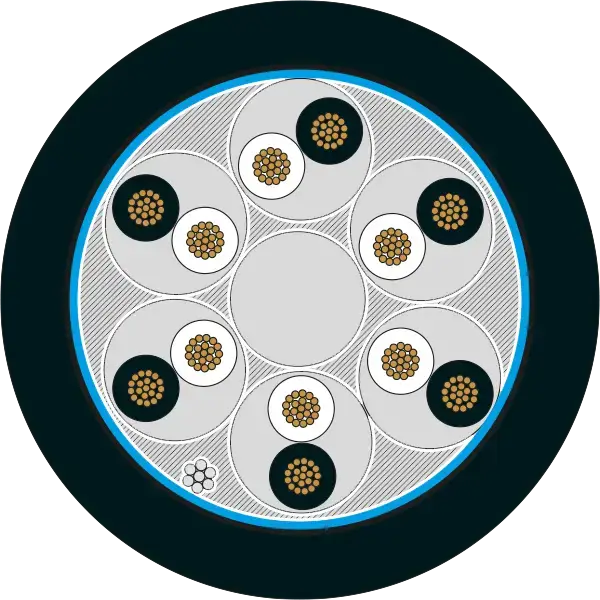
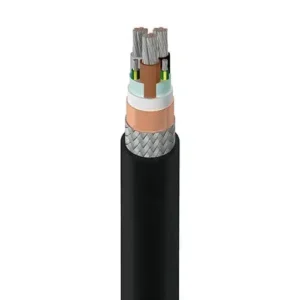
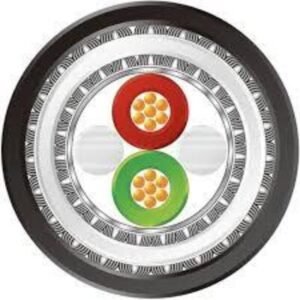
Internally, an SHF2 MUD cable is as robust as its outer sheath. It is typically constructed with tinned copper conductors to resist corrosion in saline environments. The conductor insulation is made with high-performance materials such as ethylene-propylene rubber (EPR) or cross-linked polyethylene (XLPE), which withstand high continuous operating temperatures, typically 90°C . To ensure signal integrity, instrumentation versions may include collective and/or individual shielding, protecting against electromagnetic interference (EMI).
Operational Advantages of Using an SHF2 MUD Cable
As a result of its superior characteristics, choosing an SHF2 MUD CABLE translates into significant operational advantages. The main one is increased reliability and reduced total cost of ownership (TCO). Its extreme durability reduces the need for corrective maintenance and premature replacements, preventing production stoppages that generate losses of millions of dollars. Therefore, the initial investment in a high-specification cable is quickly offset by the operational continuity and safety it provides throughout its service life.
Differences between an SHF2 MUD cable and an SHF1 cable.
It is important to note that, although both are halogen-free, there is a fundamental difference between the SHF1 and SHF2 compounds. The SHF1 compound, while safe in case of fire, does not possess the same resistance to oils, hydrocarbons, and drilling mud as SHF2. While SHF1 is suitable for dry and clean areas on vessels, the SHF2 MUD cable is specifically designed for more aggressive areas such as the drill floor and other zones exposed to fluids. The correct choice is therefore vital for the application.
Voltage and Temperature Specifications
In technical terms, the SHF2 MUD cable is manufactured for various voltage classes, the most common being 0.6/1 kV for power and control, and 250 V for instrumentation. Its operating temperature range is remarkably wide, generally from -40 ° C to + 90 ° C , allowing its installation in climates ranging from arctic to tropical. The maximum temperature in case of a short circuit can reach 250 ° C , demonstrating its incredible thermal stability, a crucial factor for the safety of the electrical system.
UV Resistance
In addition to chemical and mechanical resistance, constant exposure to sunlight in open environments, such as the deck of a ship or the top of a platform, demands high resistance to ultraviolet (UV) radiation. The SHF2 MUD cable compound is formulated with specific additives, such as carbon black, which protect the coating against degradation caused by UV rays. In this way, the cable does not dry out, crack, or lose its protective properties, even after years of direct exposure to intense sunlight.
SHF2 MUD Cable Compliance with IEC 60092-360
Compliance is fundamental in the offshore cable market. The international standard IEC 60092, part 360, specifies the requirements for sheathing materials for marine and offshore cables, including the SHF2 compound. Therefore, an SHF2 MUD cable that meets IEC 60092-360 assures the engineer and installer that the product has been tested and approved according to global performance and safety standards, facilitating project approval by classification societies such as DNV, ABS, and Bureau Veritas.
SHF2 MUD Cable: The Choice for Critical Instrumentation and Control
In automation systems, signal integrity is everything. The SHF2 MUD cable for instrumentation is designed to protect analog and digital signals against noise and interference. For this reason, it often incorporates metallic shields (aluminum-polyester tapes or copper braids) that create a Faraday cage around the conductor pairs. This protection, combined with the robustness of the outer sheath, ensures that sensor data reaches the control room without corruption, guaranteeing precise and reliable process control.
Installation Considerations
During installation, despite its robustness, some best practices must be followed for the SHF2 MUD cable . It is essential to respect the minimum bending radius specified by the manufacturer to avoid damage to the insulation and conductors. Furthermore, the pulling tension must not be exceeded. The correct use of cable glands certified for classified areas is mandatory to guarantee sealing against the ingress of gases and fluids, maintaining the integrity of the explosion-proof enclosure and the overall protection of the system.
Maintenance and Inspection
Despite its low-maintenance nature, periodic visual inspections are recommended for any cable installation in harsh environments. In the case of the SHF2 MUD cable , the integrity of the outer sheath should be checked, looking for deep cuts, excessive abrasion, or any other mechanical damage that could compromise its protection. However, thanks to its high-strength formulation, the frequency and need for interventions are drastically reduced compared to lower-specification cables, optimizing the work of maintenance teams.
SHF2 MUD Cable and Sustainability: The Halogen-Free Factor
From a broader perspective, the use of the SHF2 MUD cable is also aligned with more sustainable practices and environmental responsibility. The "halogen-free" characteristic not only protects life and assets in case of fire, but also protects the environment. Burning halogenated materials can contribute to the formation of acid rain. This demonstrates that specifying a high-performance cable like this transcends engineering and safety, also encompassing care for the ecosystem.
The Future and Innovation in the Segment
Looking to the future, the demand for even more robust and intelligent cables continues to grow. Innovations for the SHF2 MUD cable may include the incorporation of optical fibers for temperature and deformation monitoring along its length, or the development of compounds with even wider temperature ranges. Therefore, the continuous evolution of these products is driven by the relentless pursuit of greater safety, efficiency, and reliability in the world's most critical operations.
Why is Innovcable your ideal partner for the SHF2 MUD cable?
Finally, when specifying such a critical component, it is vital to have a reliable supplier. Innovcable is proud to offer a complete line of SHF2 MUD cables that meet and exceed the most stringent international standards, such as NEK 606 and IEC 60092. Consequently, by choosing Innovcable, you not only acquire a product of excellence, but also expert technical support to ensure your application has the safest, most durable and suitable solution, protecting your investment and operations.