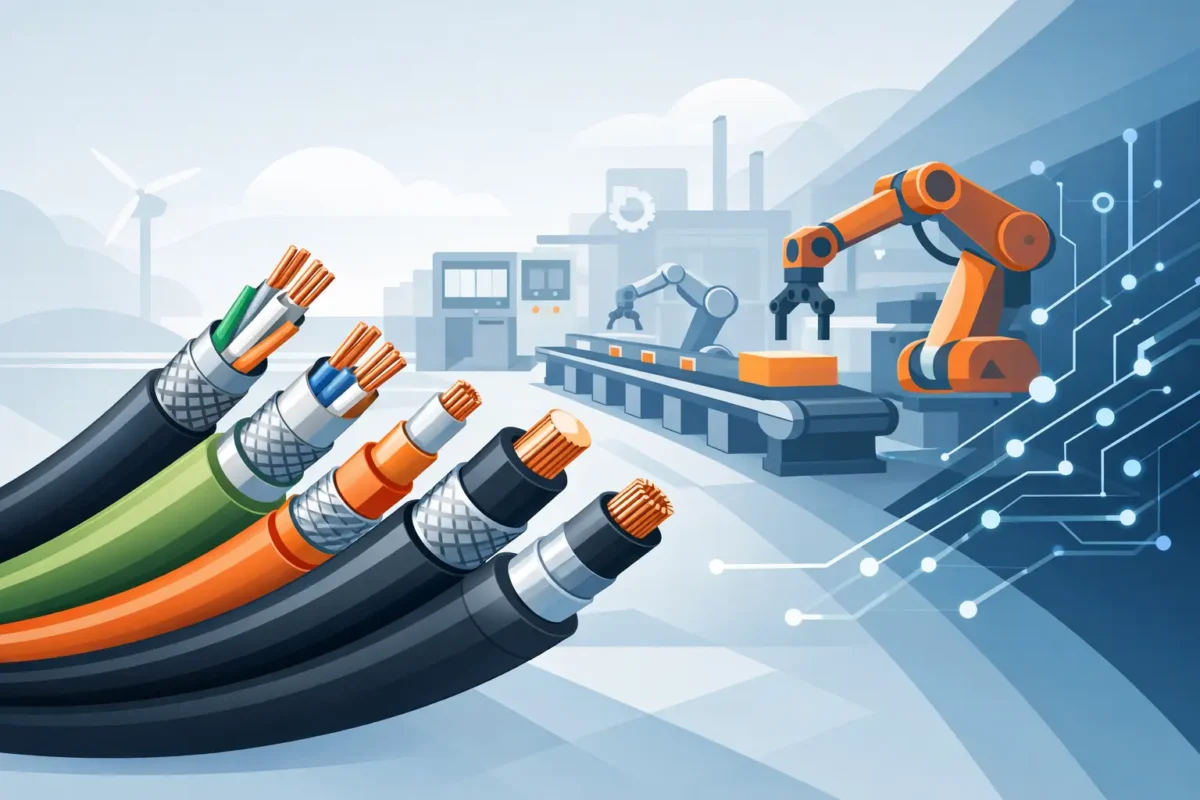
In industrial automation, appropriate cables protect signals, power, and movement. Learn how to specify reliable solutions for critical and harsh environments.
An intermittent stoppage in an automated line rarely starts at the PLC or inverter. Often, it originates at a less visible point: the cable subjected to continuous bending, electromagnetic noise, heat, oil, humidity, or excessive tension. Therefore, cables for industrial automation should not be treated as generic installation items. They are part of the performance, safety, and availability architecture of the process.
In critical applications, choosing solely based on nominal cross-section, number of conductors, or lowest initial cost creates a false sense of economy. The cable needs to withstand real-world operation: transmit data without loss of integrity, power equipment stably, withstand the environment, and maintain its characteristics throughout its lifecycle. Correct specification begins with the application, not the available stock.
What defines a cable for industrial automation?
Automation brings together circuits with very different functions in a single system. These include low-intensity analog signals, industrial communication, digital controls, sensor power supplies, motor power, and cables subjected to constant movement. Each of these functions imposes its own electrical, mechanical, and construction requirements.
A control cable, for example, needs to maintain the reliability of commands between panels, machines, and field devices. Instrumentation cables , on the other hand , must preserve the fidelity of analog signals, often in environments with sources of interference. For servomotors and frequency inverters, voltage spikes, high frequencies, capacitive currents, and the need for electromagnetic compatibility control come into play.
The technical question isn't simply "which cable can handle this voltage?". The correct question is: "which construction ensures the performance of this circuit under these installation conditions and throughout its expected lifespan?".
Industrial automation cables: risks that specification avoids
Cable failures don't always present as visible breaks. In automation, progressive degradation can cause loss of communication, unstable readings, improper activations, encoder failures, intermittent alarms, and shutdowns that are difficult to diagnose. The losses include maintenance hours, production waste, safety risks, and impact on delivery deadlines.
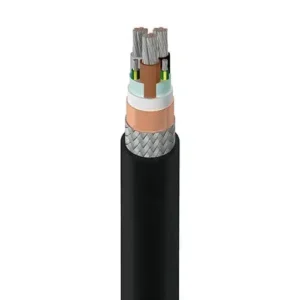
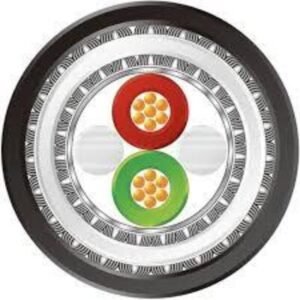
Electromagnetic interference is one of the most recurring issues. Signal cables installed near power circuits, contactors, motors, or inverters can pick up noise that compromises measurements and communication networks. Proper shielding, combined with correct grounding and physical segregation of circuits, reduces this vulnerability. However, shielding is not a universal solution: the type of shielding, its covering, the termination method, and the grounding topology need to be defined according to the application.
Another risk is the incompatibility between the outer sheath and the environment. PVC, rubber compounds, polyurethane, and special materials exhibit different responses to oil, grease, abrasion, chemicals, solar radiation, flames, humidity, and temperature variations. A cable suitable for an indoor panel may fail prematurely on a conveyor belt exposed to oil mist and abrasive particles.
It is also necessary to evaluate the mechanical stress. In fixed systems, the main concern may be the minimum bending radius and the organization of the route. In robots, cable carriers, reels, and lifting equipment, the dynamics change completely. Alternating bending, torsion, acceleration, traction, and speed require specific constructions, with flexible conductors, appropriate stranding, reinforcing elements, and geometry capable of preserving the stability of the assembly.
How to specify the cable according to the application.
The best specification is built from process data. Before defining the cable family, engineering must gather electrical, mechanical, environmental, and regulatory characteristics. This assessment avoids both undersizing and the use of an excessive solution without technical justification.
Signals, instrumentation and communication
For instrumentation signals, factors such as nominal voltage, current, signal type, circuit distance, and sensitivity to interference are crucial. Twisted pairs reduce susceptibility to noise in many applications, while individual or collective shielding may be necessary depending on the interference level and signal criticality.
In industrial networks, simply choosing a cable labeled "for data" is not enough. Characteristic impedance, capacitance, attenuation, operating frequency, connector type, and behavior in motion must be aligned with the network protocol and architecture. An improper installation can reduce communication range even when the active equipment is correctly configured.
Control, power and drives
Control cables handle commands, interlocks, and power supply to auxiliary devices. The identification of conductors, required flexibility, shielding, and sheath strength must reflect the assembly and work environment.
For motors driven by frequency inverters, greater attention must be paid. The inverter's switching generates phenomena that increase the demands on insulation, shielding, and grounding. Specific cables for inverters help reduce electromagnetic emissions and withstand electrical conditions associated with pulse width modulation. In servomotors, the combination of power, feedback, and movement requires careful evaluation of the construction and application.
The conductor cross-section remains essential, but it cannot be defined solely by the motor's rated current. Installation method, grouping, ambient temperature, voltage drop, service regime, and heat dissipation capacity all affect the sizing. In more critical projects, the analysis must consider the installation as a complete system.
Continuous movement and harsh environments
In cable carrier systems , the bending radius, travel, speed, acceleration, and internal cable arrangement directly influence durability. Cables for fixed installations can fail due to fatigue when used in repetitive motion, even if the current and voltage are within the limit.
In robotics , torsion is often as relevant as bending. In lifting equipment, tensile force and suspended weight may require specific structural elements. In mining, steelmaking, oil and gas, port terminals, and naval applications, resistance to oil, abrasion, flame, moisture, and weather conditions must be proven by construction and applicable standards.
Standards, traceability, and quality are not just documentary details.
Regulatory compliance guides objective performance and safety requirements. Depending on the project, national standards, IEC, NEK-606, or American standards may apply, in addition to specific requirements from EPC contractors, OEMs, and end users. The correct standard depends on the industry, the installation, and the risk involved.
However, stating a standard in the product description does not eliminate the need to validate the delivered product. It is necessary to evaluate technical documentation, cable identification, batch number, materials, applicable tests, and manufacturing consistency. For operations that do not tolerate failures, traceability and quality control are part of the expected reliability in the field.
ISO 9001:2015 certification is relevant in this context because it structures quality processes, but the technical decision should move towards concrete indicators: raw material control, inspection points, production repeatability, performance in bending cycles when applicable, and the ability to meet agreed deadlines.
On-demand engineering reduces project risk.
Not every application finds its solution in a standardized configuration. A project may require a specific combination of number of tracks, cross-section, shielding, identification, sheath, operating temperature, chemical resistance, low smoke emission, or reinforcement elements. Customization is particularly relevant when future replacement is complex, expensive, or operationally unfeasible.
In this scenario, partnering with a manufacturer that excels in the development and nationalization of specialized cables reduces uncertainty. Innovcable uses applied engineering to transform real-world installation conditions into manufacturable, documented solutions that meet customer needs. If it's possible to design, it's possible to manufacture with performance, quality, and industrial logistics criteria.
Before authorizing the purchase, it's worth comparing the specifications with the field: where the cable will run, what sources of interference will be nearby, what the actual bending radius will be, what chemical agents are involved in the process, and how maintenance will be performed. This careful consideration transforms the cable from a seemingly simple component into an engineering decision that protects the continuity of your operation.