Understand how cables withstand intense vibration, which materials and constructions prevent failures, and what to specify to maintain safe operation in the field.
In a centrifugal pump, a mining conveyor, or the arm of an automated machine, vibration is rarely constant and isolated. It is compounded by bending, tension, temperature, oil, dust, and equipment movement. Therefore, stating that cables can withstand intense vibration requires analyzing the complete product construction and the actual installation conditions, not just the conductor cross-section or the rated voltage.
Failure caused by vibration typically doesn't occur immediately. It begins with internal micro-displacements, abrasion between components, conductor filament fatigue, or loss of insulation integrity. When the cable ceases to be treated as a passive system component, the specification focuses on protecting operational availability, safety, and maintenance costs.
Why vibration damages industrial cables.
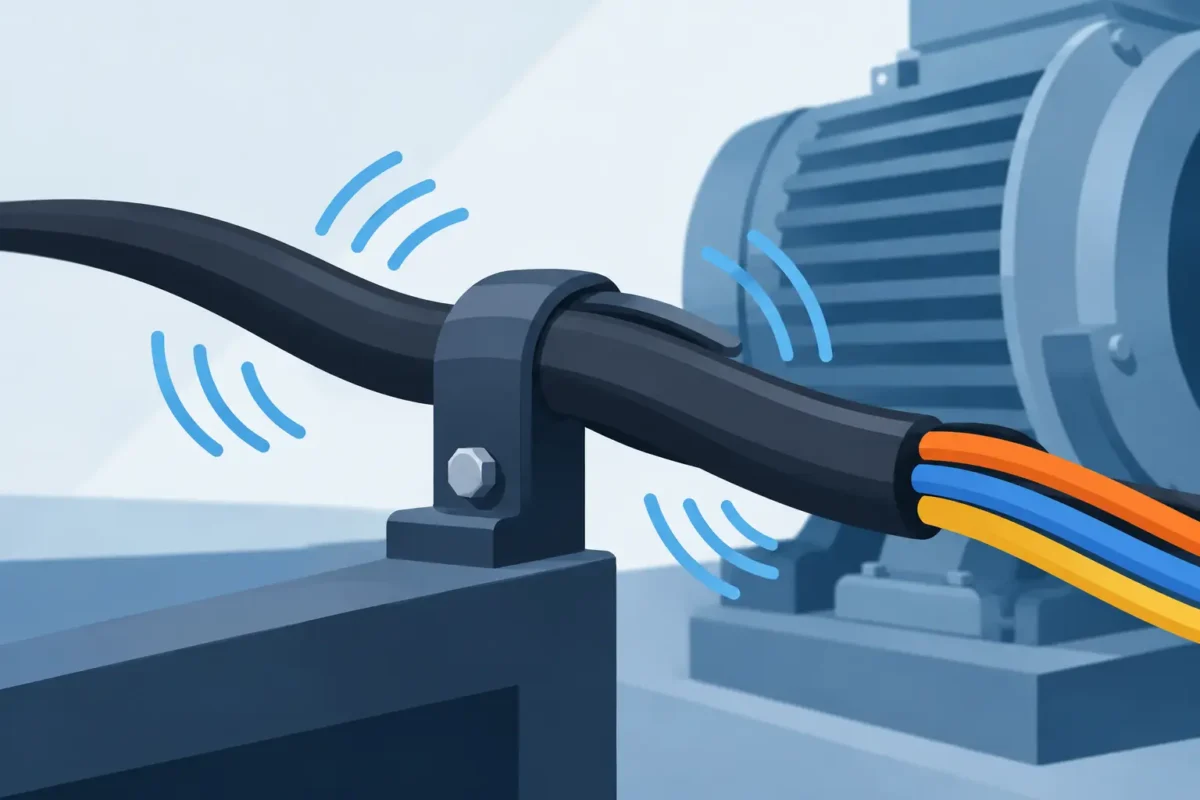
Vibration transfers mechanical energy to the cable in repetitive cycles. If it is poorly supported, excessively tensioned, or subjected to bends below the minimum radius, these cycles concentrate in a few points. Panel entries, cable glands, branches, bends near motors, and fastening areas are recurring failure points.
In conductors, cyclical movement can break filaments over time. In signal and instrumentation cables, small geometric changes can also compromise shielding, capacitance, impedance, or transmission stability. In power circuits, the consequence can be localized heating, increased electrical resistance, and unscheduled interruptions.
The outer covering also suffers. Inadequate coverage can crack or wear away due to friction against structures, cable trays, and supports. When the outer protection loses continuity, moisture, oil, chemicals, and abrasive particles reach the inner layers, accelerating degradation.
The scenario changes depending on the frequency and amplitude of the vibration. Low-amplitude, high-frequency vibration, common in motors and compressors, does not produce the same effect as large-scale movements in mobile equipment. There are also applications involving mechanical shock, frequent starts and stops, where acceleration imposes additional stress on the assembly.
Cables that can withstand intense vibration depend on their construction.
There is no single cable suitable for all vibrating equipment. Mechanical strength is the result of a combination of conductor, insulation, fillers, shielding, sheathing, and mounting method. The first decision is to understand whether the cable will remain fixed, undergo occasional bending, or perform continuous movement.
Flexible conductors reduce localized fatigue.
For applications with significant movement or vibration, conductors made of multiple thin wires distribute mechanical stresses better than rigid constructions. However, flexibility should not be interpreted solely as the ease of bending the cable during installation. It must be compatible with the number of cycles, the bending radius, the acceleration, and the tension expected in the equipment.
A flexible cable installed with excessive slack can whip around and suffer abrasion. The same cable, when improperly secured, can concentrate stress precisely at the connector or cable gland exit. Product selection and installation design need to work together.
Insulation and covering must withstand the environment.
PVC compounds, rubber, elastomers, and specialty materials respond differently to vibration, temperature, and contact with external agents. In environments with oil, grease, or hydraulic fluid, for example, the chemical compatibility of the covering is as relevant as its abrasion resistance.
Cables with rubber or elastomeric compound sheathing can offer good shock absorption and mechanical performance in certain severe applications. However, in installations with specific requirements for flame resistance, low smoke emission, hydrocarbon resistance, or sun exposure, the choice should consider the project's regulatory and operational requirements. Thicker material does not, in itself, mean a longer lifespan: inadequate sheathing can harden, crack, or lose properties sooner than expected.
Armor and internal elements cannot move freely.
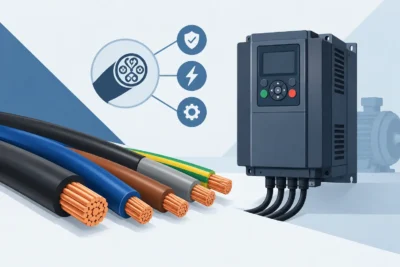
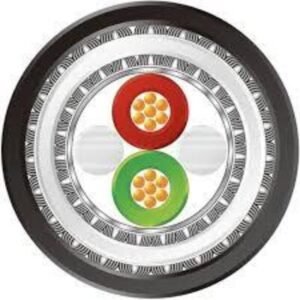
In control, data, instrumentation, servomotor, and frequency inverter cables, vibration can affect sensitive internal components. Shielding must maintain adequate coverage and electrical continuity without breaking during movement. Fillers and separation tapes help preserve cable geometry and prevent relative displacement between cores, pairs, or layers.
This internal stability is crucial when dealing with low voltage signals, industrial communication, or precision control. An intermittent signal failure caused by vibration can be more difficult to diagnose than a complete breakdown, as the system may only stop at certain speeds, temperatures, or load regimes.
What to specify before defining the cable
The correct question is not simply whether the cable can withstand vibration. It is necessary to determine what kind of vibration, in what equipment, and in conjunction with what other stresses. A consistent technical specification should incorporate application data from the engineering phase onwards.
Consider the type of equipment, the estimated amplitude and frequency of vibration, the presence of bending, the available radius, the distance between fixing points, and the existence of tension. The analysis should also include minimum and maximum temperature, contact with oil or chemicals, UV exposure, humidity, shielding requirements, operating voltage, and safety requirements.
In production lines, it's important to evaluate the effective operating time and the criticality of a shutdown. A cable in an auxiliary fan may require a different strategy than a cable in a lifting system, a continuous process pump, or a control unit in an oil and gas plant. The technically correct solution depends on the risk associated with the failure.
When a standard applicable to the sector or project exists, it must be included in the specification. IEC requirements, American standards, naval standards, and specific OEM criteria may define necessary construction characteristics, tests, and documentation. Compliance does not replace application analysis, but it establishes an objective basis for quality control and acceptance of the supply.
The installation can either preserve or negate performance.
Even a cable designed for heavy-duty service will have a reduced lifespan if the installation creates stress points. The bending radius dimensioning, cable gland selection, strain relief, and clamp spacing all deserve attention from the mechanical detailing stage.
Avoid securing the cable in a way that concentrates vibration at the termination. In vibrating equipment, supports and clamps should hold the assembly without crushing the sheath or allowing excessive movement. Compatibility between the cable's outer diameter and the accessories is also essential to maintain sealing and mechanical retention.
Another critical point is the transition between a moving and a fixed part of the installation. This region must have a defined path, without sharp edges, permanent twisting, or repetitive contact with abrasive surfaces. In shielded cables , the shield termination must meet the electromagnetic compatibility requirements of the system, as a poorly executed connection can introduce noise even when the cable is mechanically sound.
How to validate the solution for a critical application
Catalogs and technical data sheets are starting points, but critical applications require validation commensurate with the risk. Flexural tests, motion cycles, tensile strength, abrasion, electrical resistance, and insulation integrity tests provide objective evidence of expected performance. For special projects, it may be necessary to develop a specific design and validate samples before mass production.
Material traceability, dimensional controls, process inspection, and final electrical testing also make a difference. A well-developed specification loses value if the supply does not maintain repeatability between batches. In installations that do not tolerate defects, technical documentation and quality control must keep pace with the mechanical requirements of the product.
Innovcable manufactures its own products and develops custom solutions for applications where the cable needs to respond to real-world operating conditions. When vibration is part of the process, the best decision is to provide field data to engineering before a failure transforms a predictable condition into a production stoppage.
The lifespan of a cable is not defined solely by the chosen cable, but by the consistency between design, environment, assembly, and maintenance. By treating vibration as an engineering requirement from the outset, the operation stops reacting to recurring failures and begins building reliability where it matters most: in the field.