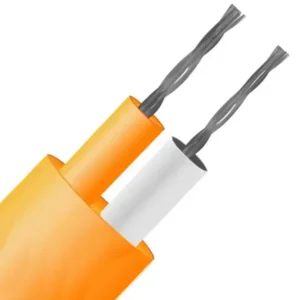
Learn how to choose mining cables based on voltage, environment, installation, standards, and lifespan, reducing real critical operational failures and downtime.
A stoppage in a conveyor belt, drainage pump, or mobile equipment rarely begins as a major event. Often, it stems from selecting a cable that is incompatible with abrasion, bending, moisture, electrical stress, or installation method. Therefore, understanding how to choose mining cable requires going beyond the conductor's nominal cross-section and the lowest price per meter. The specification must match the criticality of the circuit and the actual conditions of the mine.
In surface or underground operations, the cable is subject to simultaneous stresses: mineral dust, mud, water, oil, impact, traction, crushing, vibration, sun exposure, chemical agents, and constant cycles of movement. When the application involves mobile machinery, reels, or conveyors, the challenge increases. The cable needs to conduct energy safely, but also preserve its mechanical integrity throughout its expected operational life.
How to choose a mining cable by application
The first criterion is to define precisely what the cable will power, control, or monitor. A cable for fixed power supply to a substation has very different requirements than a cable for a drilling rig, excavator, crusher, submersible pump, conveyor belt, or instrumentation system.
Specification engineering should begin with the circuit: power, control, signal, data, instrumentation, grounding, or communication. Next, it should assess whether the installation will be fixed, mobile, suspended, buried, in cable trays, inside ducts, above the mine floor, or in a winding system.
Power cables for fixed installations can prioritize current capacity, flame resistance, mechanical protection, and compatibility with system voltage. Mobile applications , however , require flexible constructions, conductors suitable for bending cycles, and rubber or special compound coverings capable of resisting abrasion, tearing, and impacts. Using a common flexible cable in a dragging or winding operation does not solve the problem: the perceived flexibility during installation does not guarantee performance over millions of cycles.
Electrical sizing is not limited to gauge.
The conductor cross-section must withstand the design current without exceeding the thermal limits of the insulation. However, the correct calculation also considers voltage drop, circuit length, cable grouping, ambient temperature, installation method, and load regime.
In mining, it is common to find motor starters, frequency inverters, loads with high peak currents, and large distances between panels and equipment. In these cases, a cross-section defined solely by the nominal current can generate excessive heating, loss of torque in the motor, and a reduction in the lifespan of the components.
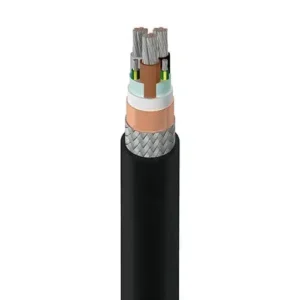
For medium-voltage circuits, the analysis must include voltage class, insulation level, shielding, metal screens when applicable, grounding method, and short-circuit conditions. The construction must be compatible with the electrical architecture of the plant and the requirements of the detailed design.
Assess the environment as part of the specification.
The mine largely determines the cable construction. Before purchase, the technical team must record which agents will act upon the product and with what intensity. Four questions help transform field conditions into technical requirements:
- Will there be continuous contact with water, mud, oil, grease, or chemical reagents?
- Will the cable be subjected to abrasion against rock, uneven ground, metal structures, or transported material?
- Is there repetitive movement, twisting, pulling, or passage through pulleys and winders?
- Will the installation be exposed to sun, rain, high heat, or low temperatures?
The answer guides the selection of the outer covering, the type of insulation, the flexibility class, and the mechanical reinforcements. Rubber coverings, for example, are frequently used when greater mechanical strength and flexibility are required, but the formulation needs to be defined according to the predominant aggressive agent. Oil resistance is not synonymous with broad chemical resistance, just as abrasion resistance does not replace performance in continuous bending.
It is also worth analyzing the risk of flame propagation and smoke emission. In galleries, tunnels, electrical rooms, and areas with people circulating, this requirement can be decisive for the safety of the operation. The selection must follow applicable standards, design criteria, and the mining company's internal requirements, without assuming that a feature automatically meets all risk conditions.
Movement, traction, and bending require specific construction.
The most common mistake in mining cables is treating a dynamic application as if it were a fixed installation. When the cable accompanies a mobile machine, is dragged across the ground, or works on a reel, its construction needs to absorb repetitive mechanical stresses without breaking conductor wires, deforming the insulation, or compromising the sheath.
For these applications, evaluate the minimum bending radius, travel speed, tensile force, weight per meter, distance traveled, and expected number of cycles. In winding systems, the cable layer on the drum, the entry angle, and tension control directly influence service life.
The presence of reinforcing elements, appropriate fillers, and a high-strength outer sheath may be necessary. In some projects, the solution includes grounding conductors, control veins , or optical fibers integrated into the same construction. This integration reduces installation interfaces but needs to be designed so as not to compromise flexibility or future maintenance.
Cables for inverters and automation
Motors powered by frequency inverters require extra attention. High-frequency pulses can increase stress on insulation and generate electromagnetic interference in nearby circuits. Inadequate cables can lead to noise in instrumentation signals, communication failures, and premature wear of motors and drives.
The choice should consider shielding, grounding, impedance, electromagnetic compatibility , and the installation path. Physically separating power cables from signal cables is a relevant measure, but it is not always sufficient. In environments with critical automation, cable construction and grounding strategy need to be defined as part of the system, not as isolated purchase items.
Standards, documentation and traceability
Regulatory compliance must be verified according to the scope of the installation. Requirements for electrical safety, machinery, mining, industrial installations, and client criteria may involve ABNT, IEC, NR-10, NR-12, and NR-22 standards, in addition to corporate specifications and international standards stipulated in the contract.
More than just citing a standard, the supplier must demonstrate the cable's suitability through technical documentation. Data such as operating voltage, maximum conductor temperature, bending radius, insulation resistance, flame behavior, mechanical strength, and material identification must be clearly stated in the technical data sheet and in the approval process.
Batch traceability, dimensional control, electrical inspections, and quality criteria also make a difference. In an environment where replacement can require scheduled downtime, team mobilization, and production losses, consistency between batches is as relevant as the performance of an initial sample.
Avoid specifying by price per meter.
The acquisition cost is a legitimate variable, but it cannot be the sole factor of comparison. Two visually similar cables can have significant differences in copper mass, rubber composition, insulation thickness, shielding, number of control points, and mechanical performance.
The technical comparison should consider the total cost of the application: estimated lifespan, replacement frequency, downtime risk, stock availability, replacement time, maintenance labor, and impact on safety. A cable with proper construction may require a higher initial investment and still reduce operating costs by avoiding recurring interventions.
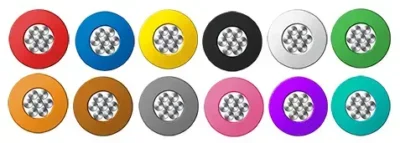
Non-standard projects deserve specific development. Manufacturing length, identification colors, shielding, reinforcements, vein combinations, and environmental requirements can be customized when the catalog solution does not fully meet the process. In-house manufacturing and engineering validation capabilities reduce reliance on improvised field adaptations.
Transform selection into an engineering decision.
A good specification includes electrical, mechanical, and environmental data before quoting. Provide information on voltage, current, power, distance, load type, operating conditions, installation method, temperature, presence of chemical agents, shielding requirements, and expected movement. Photos of the route, machine drawings, and failure history also help identify risks that may not appear in a bill of materials.
Innovcable works with this applied vision: the cable must respond to the real process, the expected standard, and the availability required by the operation. In mining, the right choice is not just the one that powers the equipment on the first day. It's the one that maintains predictable performance when the environment, load, and production begin to demand the maximum from the system.