Understand the differences between EPR and XLPE insulation and select cables for temperature, bending, installation, and service life in real-world critical industrial applications.
An insulation failure does not necessarily begin with a visible break. It can manifest as increased leakage current, accelerated thermal aging, loss of dielectric strength, or intermittent stoppage in a critical circuit. Therefore, the choice between EPR and XLPE insulation should not be treated as a simple comparison of materials: it needs to be based on the electrical, mechanical, thermal, and environmental conditions that the cable will face throughout its service life.
In industrial projects, insulation directly influences safety, operational stability, current carrying capacity, and system durability. But it is only one part of the construction. Conductor, shielding, sheathing, armor, fillers, and cable geometry also need to work as a coherent unit for the application.
What are the differences between EPR and XLPE insulation?
EPR stands for ethylene-propylene rubber, an elastomeric compound widely used in power, control, and medium-voltage cables. Its main characteristic is flexibility combined with good electrical and thermal performance. Depending on the formulation, EPR exhibits good tolerance to moisture, vibration, and more severe installation conditions.
XLPE, in turn, stands for cross-linked polyethylene. Cross-linking modifies the molecular structure of polyethylene and increases its thermal and mechanical resistance compared to conventional PE. It is a common solution in low, medium, and high voltage cables, especially when the design demands current capacity, dielectric stability, and controlled dimensions.
The decision is not simply a matter of stating that one material is superior to another. XLPE may be the most efficient choice in fixed power circuits with high electrical and thermal demands. EPR may offer advantages in applications subject to movement, vibration, humidity, or where greater flexibility is required. The correct answer depends on the complete construction and the actual service conditions.
EPR XLPE insulation in critical industrial applications.
In mining, oil and gas, shipbuilding, steelmaking, automation, power generation, and infrastructure installations, cable rarely operates under ideal conditions. There is heat near equipment, oil contamination, tensile stresses, solar exposure, starting cycles, harmonics, and paths with limited bending radii.
In these situations, specifying only the nominal cable voltage is insufficient. A motor power supply circuit, for example, may require a different solution than a frequency inverter cable, even if both have the same operating voltage. Voltage pulses, dielectric stress, shielding requirements, and grounding conditions all alter the necessary construction.
At medium voltage, the analysis must be even more thorough. The quality of the insulation, the uniformity of the semiconductor layers, the eccentricity control, and the manufacturing process have a direct impact on the distribution of the electric field. Imperfections in these elements can concentrate electrical stresses and reduce the cable's lifespan.
Temperature: check the compound, not just the abbreviation.
EPR and XLPE are often associated with high temperature ranges, but the applicable limit should not be assumed. The maximum conductor temperature under continuous operation, overload, and short circuit conditions varies depending on the compound, the reference standard, and the cable construction.
Current carrying capacity doesn't depend solely on temperature. It's influenced by conductor cross-section, number of bundled cables, installation method, ambient temperature, soil thermal resistivity, ventilation, and the presence of heat sources. A cable correctly chosen from the catalog can operate above its limit if these factors aren't considered during sizing.
For projects with frequent thermal cycles, it is worth evaluating the behavior of the assembly over time. Motor starts, variable loads, and operation in hot environments accelerate the aging of materials when the thermal margin is small.
Flexion, vibration and installation
The perceived flexibility in the field is not determined solely by the EPR (Electrical Performance Ratio). Conductor class, number of cores, assembly pitch, fillers, outer covering, and end diameter decisively influence the cable's mechanical behavior.
Nevertheless, EPR-based compounds are widely used when the application demands greater mechanical accommodation. In mobile equipment , naval installations , circuits subject to vibration, or routes with frequent curves, this characteristic can contribute to a safer installation and more stable operation.
This does not mean that every cable with EPR is suitable for continuous movement. For cable carriers, robotics, reels, or lifting systems, it is necessary to evaluate bending cycles, speed, acceleration, torsion, tension, and minimum dynamic radius. A cable for flexible installation is not automatically a cable for continuous bending.
How to select the correct insulation for the project.
The best specification is the one that transforms operating conditions into measurable requirements. Before defining EPR or XLPE, engineering must gather information that is normally scattered across electrical, maintenance, operation, and safety departments.
The four points below have a direct impact on the choice:
- Nominal voltage, current type, voltage peaks, and the presence of frequency inverters;
- ambient temperature, proximity to heat sources, and circuit load regime;
- Fixed or mobile installation, bending radius, tension, vibration and bending cycles;
- Contact with water, oil, chemical agents, solar radiation, abrasion, and flame or low smoke emission requirements.
It is also necessary to define which standards govern the supply. Depending on the sector and application, the cable may need to meet the requirements of ABNT, IEC, NEK-606 standards, American standards, or specific specifications of a plant, EPC contractor, or equipment manufacturer. Compliance must be documented for the construction actually supplied, and not just for a generic product family.
Electrical performance and lifespan
The insulation must withstand the electric field without premature degradation. In the case of XLPE, its application in power systems is related to its good dielectric stability and the ability to operate at high temperatures within design limits. In medium-voltage networks, however, moisture prevention and control of insulation interfaces are crucial for preserving performance over the years.
Due to its elastomeric nature, EPR can exhibit favorable behavior under conditions of humidity and flexibility, depending on the formulation used. In harsh industrial applications, this characteristic can reduce risks associated with movement, vibration, and handling during assembly.
None of these properties eliminates the need for proper installation. Excessive compression from cable ties, bending below the minimum radius, inadequate terminations, damage to the sheath, or incorrect shield grounding can compromise a technically well-specified cable. System reliability results from the combination of design, manufacturing, installation, and maintenance.
The external coverage also determines the outcome.
It is common to focus the discussion on EPR or XLPE and leave the sheathing in the background. This can lead to significant errors. The insulation electrically protects the conductor; the sheathing is the main barrier against abrasion, oil, weathering, chemical agents, flame, and mechanical impact, depending on the application.
An XLPE insulated cable may require special sheathing for an industrial area with oil and abrasion. Similarly, an EPR insulated cable installed on an outdoor route may require adequate protection against UV and weather conditions. In areas with fire safety requirements, requirements for non-flame propagation, low smoke emission, absence of halogens, or circuit maintenance should be evaluated, when applicable.
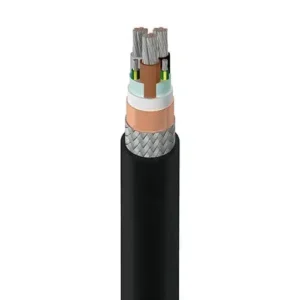
The ideal construction may include electromagnetic shielding , metallic armor, separator tape, drainage conductor, or specific sheathing materials. Each layer adds a function, but can also alter weight, diameter, flexibility, cost, and manufacturing time. Cable engineering is, to a large extent, the management of these compromises.
When customization prevents field failures
Projects that deviate from standard catalog specifications require an engineering assessment before purchase. This occurs, for example, when there is a combination of medium voltage, harsh environments, mobile installation, international standards, and the need for a tight deadline. In these cases, adapting a conventional solution can generate incompatibilities that only appear after energization.
Innovcable develops special cables based on the electrical, mechanical, environmental, and regulatory requirements of each application. The goal is not just to supply a cable with EPR or XLPE, but to deliver a construction capable of supporting the intended operation, with quality control and documentation compatible with the project.
When specifying insulation, treat it as an engineering decision, not just a bill of materials. When temperature, installation, movement, environment, and standards are precisely defined, the cable ceases to be a point of risk and becomes part of the process reliability.