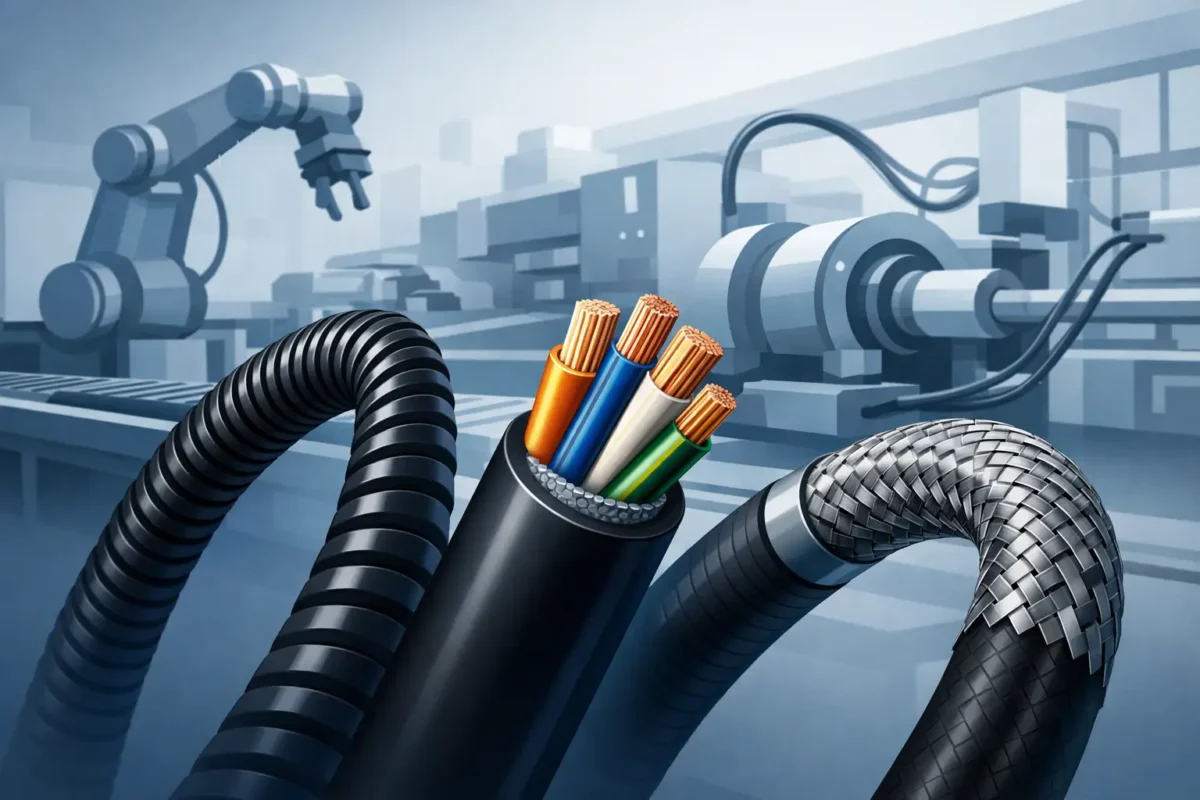
Learn the criteria for selecting the best cables for continuous bending and increasing the reliability of conveyors, robots, and critical industrial machines.
A cable failure in a cable carrier is not just a component replacement. It can disrupt a robotic cell, compromise production rates, and increase maintenance costs that could have been avoided during the specification phase. Therefore, identifying the best cables for continuous bending requires evaluating the actual machine movement, cable construction, and the electrical and environmental conditions of the application.
In dynamic applications, a typical cable can experience conductor breakage, signal alteration, sheath wear, or performance loss long before its expected lifespan. The correct criterion is not just the nominal cross-section or operating voltage. It's the ability to withstand millions of movement cycles with mechanical and electrical stability.
What defines cables for continuous bending?
Cables for continuous bending are designed to operate in repetitive and controlled movements, especially within cable carrier systems. Unlike fixed or occasional bending installations, in these systems the cable continuously travels a defined bending radius, with acceleration, speed, and cycles that vary according to the equipment.
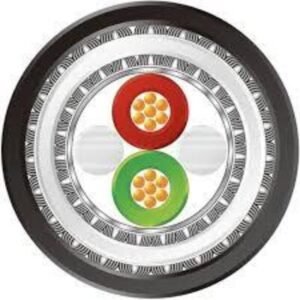
The internal construction needs to distribute the torsional, compressive, and tensile stresses generated during movement. Extra-flexible conductors, appropriate stranding, compatible insulation, and support elements work together to reduce material fatigue. The outer sheath, in turn, must withstand abrasion, friction between cables, contact with guides, and, when applicable, oil, moisture, chemical agents, and high temperatures.
Performance depends on the overall package. A highly flexible conductor does not compensate for an inadequate abrasion-resistant sheath, just as a good sheath does not solve an internal geometry that allows excessive displacement of the elements during the cycle.
How to choose the best cables for continuous bending.
The selection process begins with the movement profile, not the catalog. The designer or maintenance manager must determine the travel distance, minimum bending radius, speed, acceleration, operating frequency, and expected service life. This data allows for the sizing of a cable that operates within its design limits.
Number of cycles and severity of movement
Not all conveyor belts operate under the same conditions. A machine with short travel times and low frequency has a different operating regime than a high-cadence packaging line or a three-shift automated handling system. The expected number of cycles must be compatible with the cable's declared performance for that operating condition.
It is also necessary to consider whether there are combined movements. Continuous bending on a treadmill is not the same as twisting in a robotic arm. When both forces occur simultaneously, the solution may require a specific cable for robotics, with a construction prepared for multidirectional movements. Applying a treadmill cable in an application with intense twisting reduces its lifespan, even if the other parameters seem correct.
Radius of curvature and conveyor belt occupancy
The bending radius is a crucial variable. The smaller the radius, the greater the stress imposed on conductors, insulation, and sheathing. The cable must be specified according to the dynamic radius recommended for its construction and installed without exceeding this limit.
The internal organization of the conveyor belt also directly affects the result. Compressed, crossed cables or those subjected to locking points suffer premature wear. As a design reference, it is necessary to provide lateral clearance for orderly movement, adequate separation between circuits when required, and mass distribution that avoids overloading a single cable. The best construction loses performance when the installation creates permanent friction or excessive mechanical stress.
Outer cover material
The choice between PVC, polyurethane, elastomeric compounds, and other formulations depends on the environment. PVC can meet industrial applications with moderate requirements, while materials such as polyurethane tend to offer greater resistance to abrasion and contact with certain oils and fluids. In areas with heat, welding, weathering, chemicals, or special low-smoke emission requirements, the analysis should consider appropriate compounds and project regulatory requirements.
There is no single superior material for all scenarios. A cover with high abrasion resistance may not be the most suitable choice for a given temperature range or chemical condition. The specification must balance flexibility, environmental resistance, safety, and total cost of ownership.
Conductors, shielding, and signal transmission
In control , command, data, instrumentation, servo, or feedback cables, electrical integrity is as critical as mechanical strength. Flexible copper conductors, with stranding appropriate for movement, reduce stress concentration at specific points. The insulation must maintain dielectric stability even after repetitive cycles.
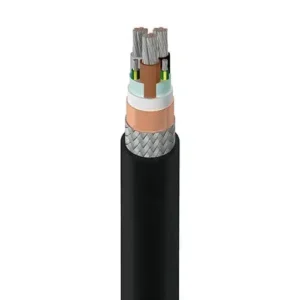
When dealing with frequency inverters, servo motors, low-intensity analog signals, or industrial communication, shielding requires special attention. It helps control electromagnetic interference and preserve signal quality. However, the shielding also needs to be built to accommodate movement without breaking or compromising electrical continuity. Proper grounding and termination are part of the solution, as poorly installed shielding may not deliver the expected performance.
Applications that require careful specification.
Cable carriers are common in machining centers, packaging lines, textile machines, overhead cranes, storage systems, gantries, mining equipment, and automation plants. In each scenario, the cable may carry power, control signals, data, motor power, or safety circuits.
In CNC machines, for example, the reduced space and high repetition of movements demand attention to the radius of curvature and electromagnetic compatibility. In load handling equipment, in addition to bending, tension and exposure to dust or oil can define the necessary construction. In robotic cells, torsional stresses often direct the choice towards cables specifically developed for robots.
Offshore, naval, rail, or oil and gas projects may add requirements for flame resistance, low smoke emission, resistance to hydrocarbons, salt spray, and compliance with applicable standards. In these cases, treating continuous bending as the sole criterion is insufficient. The solution needs to integrate dynamic performance, safety, and technical documentation of the project.
Common mistakes and how to avoid them.
Intermittent conductor breakage is a typical sign of bending fatigue. It can cause outages that are difficult to diagnose, especially in signal cables, where the fault only appears in a specific position along the cable tray. Wear on the sheath can indicate excessive abrasion, chemical incompatibility, or installation with cables touching structural components.
Another common mistake is using cable for fixed installations simply because it has the same cross-section and number of conductors as the originally required item. Electrical equivalence does not represent mechanical equivalence. Similarly, installing the cable without respecting the proper length in the moving section can generate tension at the ends or excessive slack, favoring tangles and deformations.
To reduce risks, commissioning should verify the complete path of the conveyor belt, the behavior of the cables at maximum speed, the fastening at the ends, and the absence of interference. Periodic inspections help identify abrasion marks, flattening, changes in geometry, and signs of overheating before an unscheduled shutdown occurs.
Engineering applied to cable selection
The specification gains precision when the manufacturer, integrator, and engineering team analyze the application as a system. Information such as available outer diameter, conveyor type, stroke, load, rated voltage, current, shielding requirements, environment, and expected cycles guide a technically suitable solution.
In unconventional applications, customization can be more efficient than adapting a standard line cable. This can involve combining conductors, different cross-sections within the same cable, shielded pairs, power and control elements, special sheaths, or specific standard requirements. On-demand manufacturing allows for aligning the construction with the equipment, reducing compromises that typically arise when trying to fit a harsh condition into a generic solution.
Innovcable operates with this vision of applied engineering, developing special cables for demanding industrial conditions and supporting the technical definition according to the real stresses of the operation. Quality control, traceability, and performance criteria must accompany the product from design to delivery.
When selecting a cable for continuous motion, the central question should not only be how much it costs per meter, but how long it sustains machine availability. With correct application data and a design developed for dynamic conditions, the cable ceases to be a recurring point of failure and becomes a protector of system productivity.