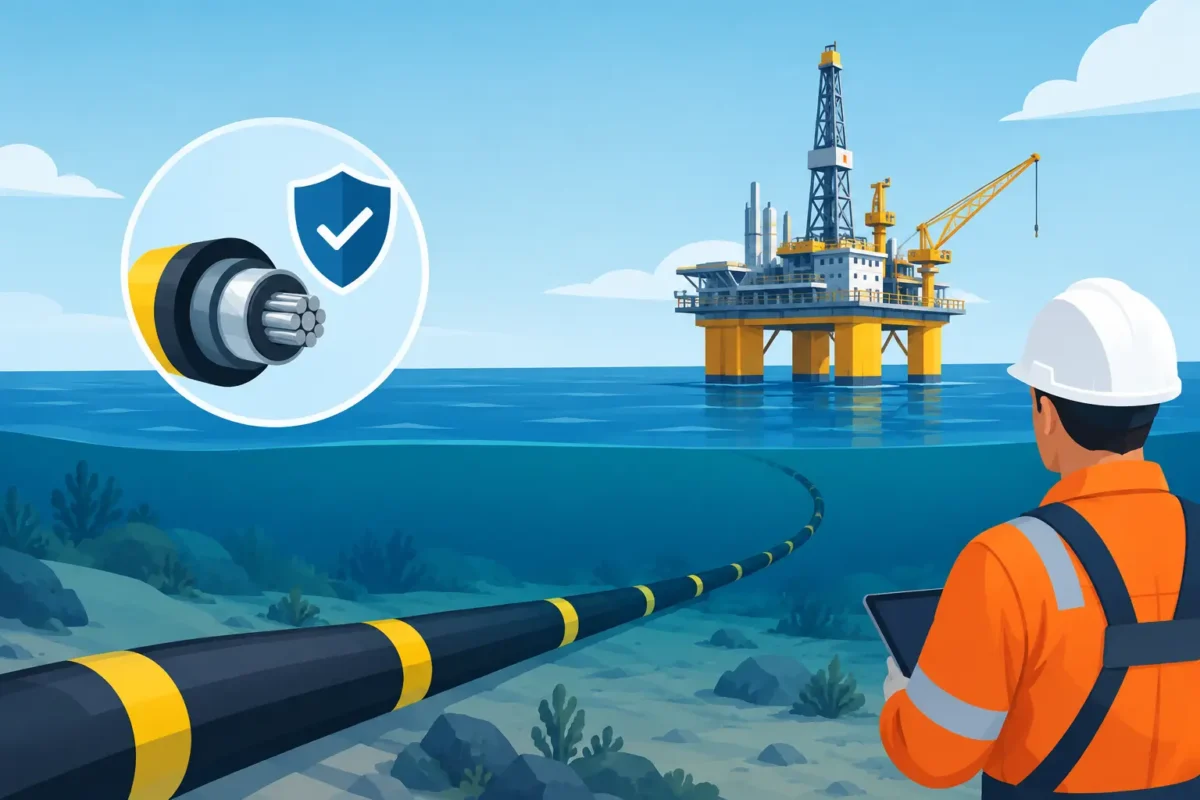
Understand how the new standards for offshore cables impact the specification, safety, and lifespan of critical systems at sea for maritime assets.
On an offshore platform, a cable is not just an interconnecting component. It supports power, control, instrumentation, communication, and safety in an environment subject to sea spray, vibration, oil, operating pressure, and fire risk. Therefore, the new standards for offshore cables require attention beyond simply reading a technical data sheet: they alter specification criteria, documentation, testing, and traceability for critical projects.
The first premise is objective: there is no single new, universal, and isolated standard that replaces all previous requirements. Regulatory updates in the offshore sector occur through revisions of IEC standards, references such as NEK 606, contractual requirements, classification society rules, and internal requirements of operators, EPC contractors, and shipowners. The real impact depends on the type of asset, the flag, the location of the operation, and the electrical function of the circuit.
Why do the new standards for offshore cables raise the requirements?
The marine environment accelerates degradation mechanisms that, in land-based installations, can take years to become critical. The combination of salinity, humidity, oil mist, UV radiation, structural movement, and thermal cycles affects insulation, sheathing, shielding, armor, and terminations.
When a regulatory requirement is revised, the intention is not merely to update nomenclature. Generally, the change reflects field data, new safety practices, material evolution, or a clearer need to demonstrate performance. For the specification authority, this means evaluating whether the cable maintains its electrical, mechanical, and safety properties throughout the asset's projected lifespan.
In offshore systems, an inappropriate choice can lead to more than just corrective maintenance. A failure in an instrumentation circuit can compromise process readings. A power cable incompatible with the environment can reduce the availability of pumps, compressors, or auxiliary systems. In emergency circuits, electrical continuity during a fire can be crucial for evacuation, firefighting, and operational control.
Standards and references that most influence the specification.
The IEC 60092 series remains a central reference for electrical installations on ships and marine units. Within this set, requirements related to cable construction, materials, conductor sizing, and performance for naval applications guide the technical choice according to the circuit's function.
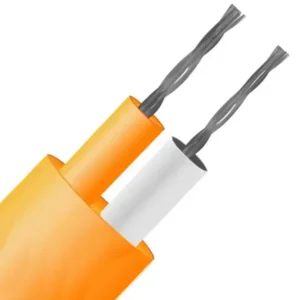
NEK 606 also has a strong presence in offshore projects, especially when there are requirements related to the oil and gas industry influenced by Nordic standards. It establishes guidelines for low-voltage cables and instrumentation, focusing on performance in harsh conditions, safety, and compatibility with offshore installations. However, specifying a cable as "compliant with NEK 606" without analyzing the design is insufficient. It is necessary to verify construction, voltage, shielding, fire behavior, sheathing material, and installation conditions.
Other standards frequently associated with product validation include IEC 60332 for flame and fire propagation; IEC 60754 for halogenated gas emissions and acidity; IEC 61034 for smoke density; IEC 60811 for test methods for insulating and sheathing materials; and IEC 60228 for conductor classes and characteristics. In specific contracts, requirements from DNV, ABS, or Lloyd's Register may supplement or mandate certain approval criteria.
NR-37 should also be considered in the analysis when the project involves safety and working conditions on oil platforms. Although it is not a construction standard for cables, it reinforces the context of prevention, integrity of installations, and protection of people, which makes electrical compliance even more relevant.
What changes in practice for engineering and supply?
The main change is the replacement of a purchase based on generic descriptions with a specification based on operational risk. Terms such as "marine cable," "offshore cable," or "oil-resistant cable" are starting points, not sufficient selection criteria.
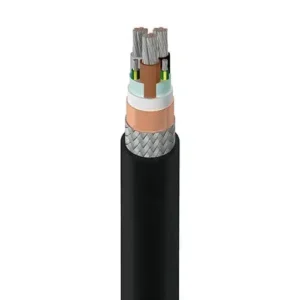
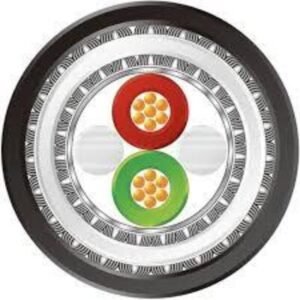
Before quoting, the engineering team must determine whether the circuit requires flexible or rigid conductors, voltage class, individual or collective shielding, pairs or triples, armor, moisture barrier, thermoplastic or elastomeric sheathing, and fire behavior. The installation method must also be considered: cable trays, raceways, passage through classified areas, exposed outdoor areas, ducts, mobile equipment, or sections subject to bending.
In the supply chain, the effect is direct. Apparently equivalent cables can have significant differences in construction and performance. A product with a smaller outer diameter, for example, may facilitate installation, but may not necessarily meet the mechanical strength, sheath thickness, or armor requirements specified in the project. The lower initial price can turn into a high cost if there is rework, commissioning delays, or premature replacement.
Documentation also becomes crucial. Raw material certificates, test reports, batch identification, production traceability, and declarations of conformity must reflect the criticality level of the application. For projects subject to third-party inspection, the absence of documentary evidence may prevent the release of the material even when the cable has been physically installed.
Fire safety is not an isolated issue.
Among the most sensitive points of the regulatory updates is the behavior of cables in fire. There is often confusion between flame-retardant cables, fire-resistant cables, and cables with low smoke and toxic gas emissions. These are distinct properties and must be defined according to the function of the circuit.
A flame-retardant cable aims to limit the spread of fire. A fire-resistant cable must preserve circuit continuity for a specified period under specific test conditions. Halogen-free materials can help reduce corrosive smoke and aggressive gases, facilitating escape routes and preserving electronic equipment. None of these characteristics automatically replaces the other.
In detection, alarm, emergency lighting, critical communication, and safe shutdown systems, continuity of service during a thermal event may be required. For conventional power or control circuits, the criteria may be different. The correct specification depends on the risk analysis, the asset safety philosophy, and the contract requirements.
Mechanical and chemical resistance must be considered during application.
Offshore cables need to withstand more than just salt exposure. In process areas, occasional contact with hydrocarbons, hydraulic fluids, greases, and chemicals may require specific sheathing compounds. In outdoor areas, UV, ozone, and temperature variations become important factors. In mobile equipment , the design must consider bending radius, bending cycles, tension, and torsion.
Shielding deserves equally careful evaluation. In instrumentation and control cables, it reduces susceptibility to electromagnetic interference that can compromise low-intensity signals. However, the type of shielding, drainage, electrical continuity, and grounding must be aligned with the system architecture. Adding shielding without correctly defining the grounding strategy does not solve all electromagnetic compatibility problems.
There are also trade-offs. A thicker covering or metal reinforcement can increase mechanical protection, but it increases weight, diameter, and installation effort. A material with excellent chemical performance may have a higher cost or require specific installation precautions. The right decision is one that balances required performance, service life, installability, and total cost of ownership.
How to revise a specification in light of new requirements.
The safest approach is to review the application before defining the product. The team should begin with the circuit's function and the criticality of the load, moving on to the rated voltage, current, voltage drop, operating temperature, installation route, and environmental exposure. Then, the requirements for fire resistance, low smoke, halogenated gases, chemical resistance, shielding, and mechanical protection should be validated.
Next, it is worth comparing the specification with the project's list of standards, classification society documents, and the end customer's specific requirements. This cross-referencing avoids two recurring errors: over-specifying a cable and increasing costs without operational gain, or under-specifying and discovering the incompatibility only during the inspection or commissioning phase.
Finally, manufacturing must be accompanied by controls that confirm what has been specified. Dimensional measurements, conductor verification, electrical testing, batch identification and traceability are part of the reliability delivered. In unconventional projects, construction customization may be the most technically suitable alternative, provided it is developed based on clear and verifiable requirements.
Regulatory updates should not be treated as a bureaucratic obstacle. They are an opportunity to eliminate design ambiguities and increase operational predictability. When the specification transforms the real risk of the asset into measurable requirements, the cable ceases to be a commodity and begins to fulfill its role: protecting system continuity in one of the world's most demanding industrial operations.