Find out which cable can withstand lubricating oil in industrial machines and processes, considering materials, temperature, bending, standards, and service life.
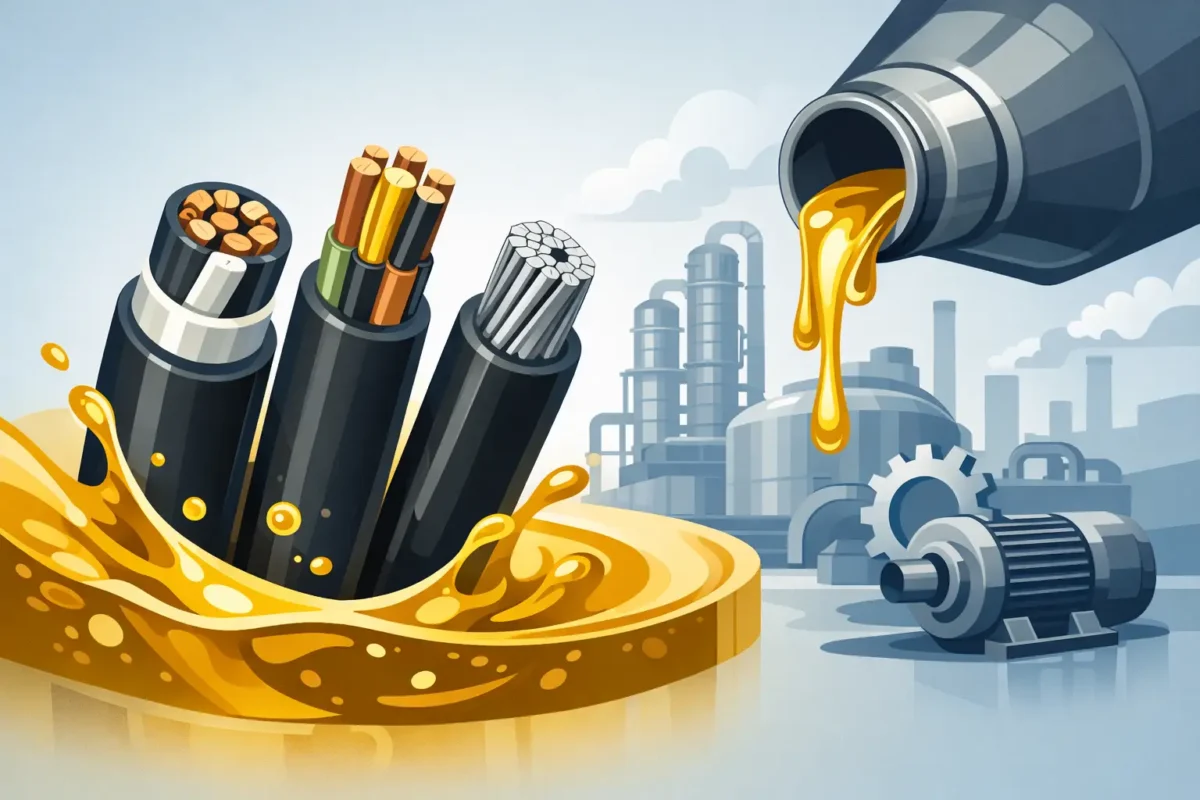
The question "which cable can withstand lubricating oil" seems simple, but a reliable answer isn't just about the name of a material. In a machine tool, hydraulic unit, production line, or pumping system, the cable may be exposed to mist, splashes, occasional immersion, high temperatures, and continuous movement simultaneously. The correct selection depends on the oil composition, the intensity of contact, and the electrical, mechanical, and regulatory requirements of the installation.
An inadequate cable may exhibit swelling, hardening, or cracking in the outer sheath. As the outer sheath degrades, moisture and contaminants reach the inner layers, compromising insulation, shielding, and operational continuity. In critical industrial environments, oil resistance should be treated as an engineering requirement, not as a generic catalog feature.
Which cable can withstand lubricating oil?
In most industrial applications, cables with polyurethane (PUR) sheathing, special rubbers, or PVC compounds formulated for oil resistance are the most suitable options. However, each construction meets specific requirements. The choice should be validated by the cable's technical data sheet and by its chemical compatibility with the fluid actually used.
PUR is frequently used in cables subjected to bending, abrasion, and contact with mineral oils, especially in cable carriers , automated machines, and mobile equipment. Its combination of mechanical and chemical resistance is ideal for operations where the outer sheath is subjected to constant friction, contact with chips, and coolant mist.
Elastomeric compounds, including nitrile rubber-based formulations and other polymers developed for harsh environments, can be specified when flexibility, thermal resistance, or high hydrocarbon tolerance is required. Oil-resistant PVC formulations can adequately meet the needs of less severe fixed or mobile installations, provided that temperature, oil concentration, and mechanical stress remain within the specified limits.
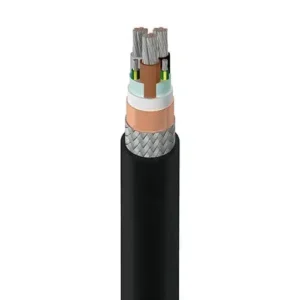
The key point is that the copper conductor does not define the oil resistance. This performance results primarily from the insulation and sheathing materials, the thickness of the layers, and the manufacturing process. Two visually similar cables can behave very differently after months of exposure to the same lubricant.
The oil composition changes the specification.
Not all lubricating oils have the same effect on polymers. Mineral oils, synthetic oils, hydraulic oils, cutting fluids, greases, and emulsions can react differently with the cable coating. The presence of anti-corrosion additives, solvents, detergents, or extreme pressure agents also alters the scenario.
A cable approved for occasional contact with mineral oil is not automatically qualified for continuous immersion in synthetic fluid. Similarly, an oil-resistant sheath may not be suitable for a cutting emulsion with a high presence of water, detergents, and metallic particles. Therefore, the analysis must consider the chemical product, the fluid's safety data sheet, and how the contact occurs during operation.
Temperature amplifies this effect. The higher the temperature of the oil and the environment, the faster the aging of the polymer compound tends to be. A cable that operates without significant alteration in contact with oil mist at 40 °C may fail prematurely in a confined region with constant heat and contaminant accumulation.
Occasional contact, splashing, or continuous immersion.
The severity of the exposure is one of the most overlooked criteria when purchasing cables. Occasional splashes on a control panel require a different solution than that needed for a cable running along a conveyor belt near a machining center.
In the case of occasional contact, oil-resistant sheathing can provide sufficient protection, provided the cable is installed without abrasion points and respects the minimum bending radius. In constant mist and condensed fluid conditions, chemical resistance must be combined with good sealing of connectors, cable glands, and junction boxes. If immersion is involved, even periodically, the specification must explicitly state this condition or be confirmed by a technical evaluation from the manufacturer.
It is also necessary to observe the migration of oil along the assembly. The fluid can penetrate through poorly sealed ends, reach conductors, and move internally by capillary action. In instrumentation and control cables, this represents an additional risk to signal stability and connection reliability.
Cable for moving oil: bending, tension and abrasion
When the cable is used in moving parts, oil resistance is only one part of the specification. In cable carriers, robots, gantries, and packaging machines, the product must withstand bending, acceleration, twisting, and abrasion cycles without the sheath wearing out or the internal cores breaking.
In these applications, cables for continuous motion with PUR sheathing or special compounds are usually more suitable than conventional control cables. In addition to the sheath, the internal construction makes a difference: flexible stranding, separation elements, fillers, appropriate shielding, and stable geometry reduce the risk of mechanical fatigue.
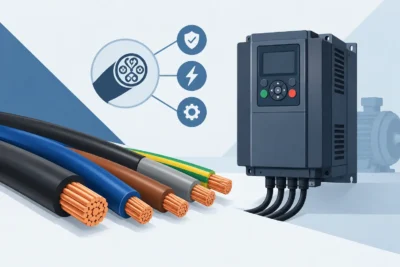
For servomotors and frequency inverters, the selection needs to go beyond chemical resistance. More stringent electrical voltages, electromagnetic interference , and shielding requirements must be evaluated in conjunction with oil, movement, and temperature. Choosing solely based on the outer casing may result in an incomplete system solution.
How to correctly specify an oil-resistant cable
A well-structured technical request reduces rework, downtime, and replacement costs. To define the cable, the engineering or maintenance team must provide, at a minimum:
- Type and manufacturer of the oil, hydraulic fluid, cutting fluid, or grease;
- Contact conditions: splashing, mist, washing, partial or continuous immersion;
- fluid temperature and maximum ambient operating temperature;
- Fixed installation, occasional bending, cable carrier, twisting or robotic movement;
- voltage, current, number of channels, shielding requirements, and signal requirements;
- presence of abrasion, UV radiation, moisture, additional chemical agents or flame hazard;
- Design standards, end-customer requirements, and applicable documentation.
This information allows you to assess whether the cable should prioritize a PUR sheath, a special elastomer, oil-resistant PVC, or a custom construction. It also helps in sizing shielding, conductor cross-section, flexibility class, and the product's operational limits.
Standards and performance evidence
The term "oil resistant" must be supported by technical documentation. Material tests and performance requirements verify changes such as mass variation, elongation, tensile strength, and sheath integrity after exposure to fluids and defined temperatures. The applicable standard varies according to the cable family, the market served, and the installation environment.
In industrial, naval, oil and gas, or export-oriented projects, requirements may be based on IEC standards, American standards, customer specifications, machine manufacturer standards, or specific classification criteria. Compliance must be analyzed as a whole, including fire resistance, low smoke emission, electromagnetic compatibility, rated voltage, and mechanical performance.
Simply requesting a "rubberized cable" or an "oil-resistant cable" is not enough. These commercial descriptions do not define chemical compatibility or guarantee field performance. The technical data sheet must clearly indicate the application limits, and any out-of-specification condition should be treated as an engineering development or validation.
When a standard cable isn't enough
Critical applications often combine factors that make conventional solutions unfeasible: hot oil, continuous bending, abrasion, external environment, presence of water, electrical interference, and tight maintenance schedules. In these cases, the solution may require a custom-built solution, with specific covering materials, reinforced shielding, identification colors, defined length, and compliance with project standards.
Innovcable operates in this type of demand with manufacturing applied to real operating conditions. The choice begins with understanding the process, not with a generic reference. This allows us to design control cables, instrumentation, conveyors, robotics, servomotors and other special lines with a focus on durability, safety and equipment availability.
Before replacing a damaged cable, it's worth investigating the cause of the failure. If the sheath is swollen, brittle, or has lost its flexibility, the problem may lie in lubricant incompatibility, excessive temperature, or a combination of oil and abrasion. Repairing only the broken point keeps the risk alive. Specifying the cable for its actual condition transforms recurring maintenance into an engineered solution with a predictable lifespan.